
Constitutional Civic Inquiries
GRADES 5–12: WE THE PEOPLE, LEVELS 2 & 3
Compelling Question: Does the use of effective questioning lead to deeper understanding than prepared testimony alone?
Time Required: One to two class periods
Overview
Prepared testimony is rehearsed; the follow-up period is not. This is where hearing judges learn what students genuinely understand, and where the strongest teams distinguish themselves. This lesson prepares students on both sides of the exchange — crafting questions that probe rather than merely recall, and responding to unanticipated questions with composure and evidence.
What Students Will Do
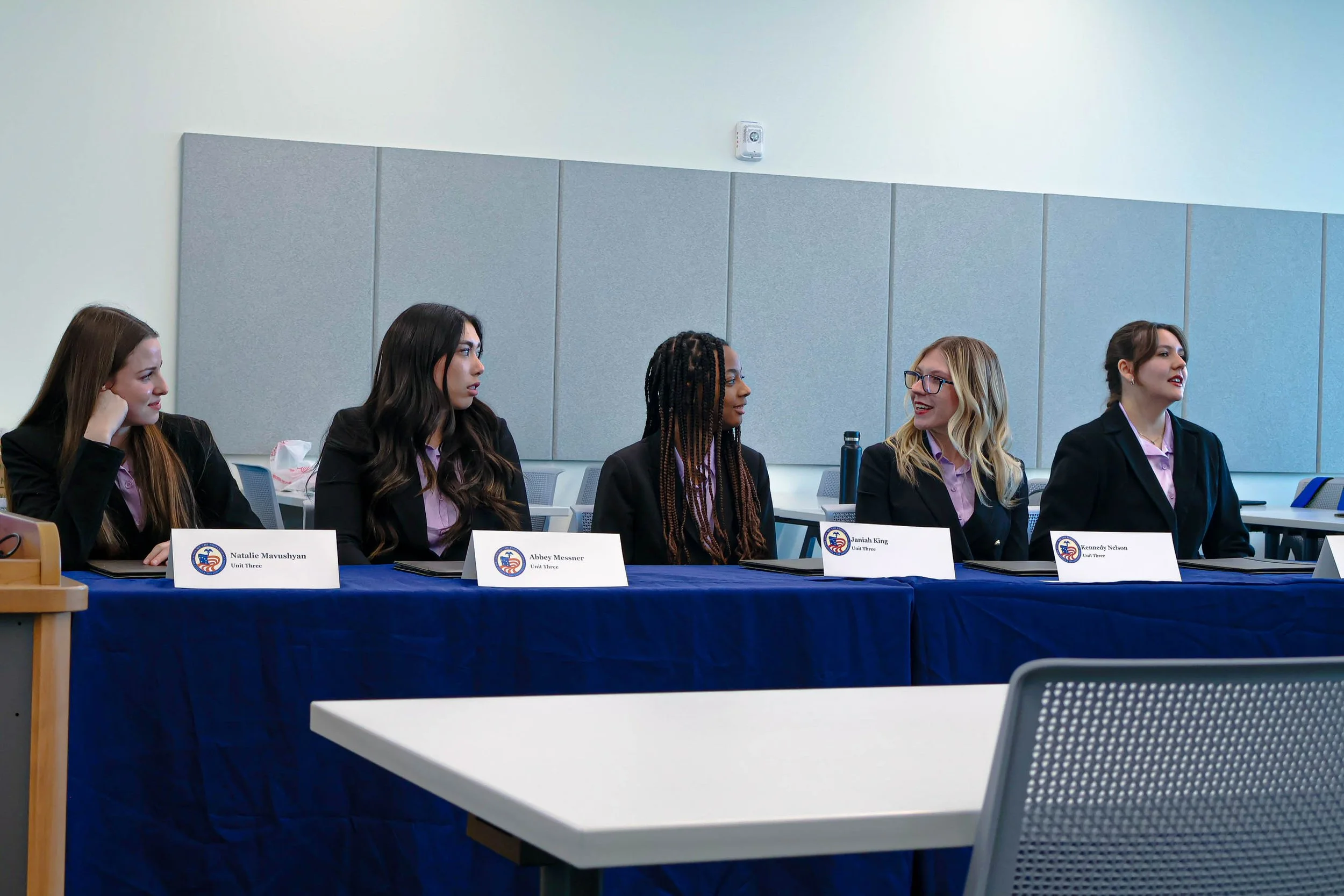
Students study the follow-up portion by observing authentic hearing footage, using an observation organizer to note what makes both a question and an answer effective. They learn to classify questions by cognitive level — knowledge, comprehension, application, analysis, synthesis, and evaluation — and recognize why the higher levels produce more revealing exchanges. Working from their assigned hearing prompts, teams then brainstorm and refine follow-up questions for a partner team, deliver those questions in a live practice round, and field questions in return. A structured feedback tool and an exit ticket close the cycle, with the Simulated Congressional Hearing Scoring Rubric anchoring the way students assess one another.
Student Outcomes
By completing this lesson, students will be able to explain the purpose and expectations of the follow-up question portion of a hearing; classify and construct questions at varying levels of cognitive demand; craft effective follow-up questions to a constitutional prompt; and respond verbally to unanticipated questions, using evidence to support their position. Students will also strengthen active listening, open-mindedness, and the capacity to incorporate feedback and improve.